WITH RISING INPUT COSTS, SMALL COMPANIES WILL HAVE TO EXPLORE OPTIONS
A who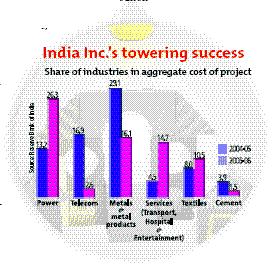 pping Rs.14.895 trillion is what India needs to pump in the infrastructure for the next five years, says CII in a recent report. The private sector, too, will have to contribute an enormous Rs.600 billion every year, further adds the report. According to RBI’s August bulletin, capital expenditure by the private sector has shown a remarkable growth in FY06, but is expected to increase at a decreasing rate in the current fiscal year, courtesy rising input cost. The aggregate capex of the services industry catapulted from a mere Rs.42 billion in 2004-05 to Rs.196.69 billion in 2005-06, taking the total capex to a record Rs.824.50 billion (an 8% increase over last year). Also, there has been a substantial increase in the project cost & average cost, which primarily hints at two things.
For Complete IIPM – Editorial , Please Click on IIPM-Editorial Link
A who
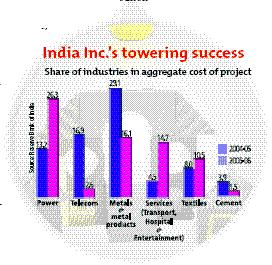 pping Rs.14.895 trillion is what India needs to pump in the infrastructure for the next five years, says CII in a recent report. The private sector, too, will have to contribute an enormous Rs.600 billion every year, further adds the report. According to RBI’s August bulletin, capital expenditure by the private sector has shown a remarkable growth in FY06, but is expected to increase at a decreasing rate in the current fiscal year, courtesy rising input cost. The aggregate capex of the services industry catapulted from a mere Rs.42 billion in 2004-05 to Rs.196.69 billion in 2005-06, taking the total capex to a record Rs.824.50 billion (an 8% increase over last year). Also, there has been a substantial increase in the project cost & average cost, which primarily hints at two things.
For Complete IIPM – Editorial , Please Click on IIPM-Editorial Link
Source:- IIPM-B&E , 2006
An IIPM And Management Guru Prof. Arindam Chaudhuri’s Initiative


 gets more convenient with a Visa Card or two in tow. That is why cricket’s ubiquitous celebrity – the baadshah of boisterous – Navjot Singh Sidhu has been caught clean by Visa International to spread the good word about the company’s sponsorship of the imminent ICC cricket tournament. And words are what Sidhu can rattle off at the drop of a hat; not just that, switch on any channel – sports or news – chances are that his rumbustious Sidhuisms are doing the rounds. His quotes and his penchant for witticism (bordering on the corny and the eccentric at times, but nonetheless hilarious!) exemplify his friendly and flamboyant nature. Which is probably why Visa ‘got him’.
 of August in order to promote holiday packages for the ICC Champions Trophy 2006. Winners who devise the best ‘Sidhuisms’ will get to be at the ICC. All you have to do is shop till you drop and foot the bill with your Visa card, and you’re entitled to take part in the contest. Visa is looking at leveraging Sidhu’s wackiness for added impetus – all this to draw in the crowds. The swashbuckling wordsmith is bound to shore up responses to the company’s initiatives, outdoing Visa’s earlier tie with Sachin. In the meantime, here’s a potential Sidhuism winner for the contest: “Fields and the competitive arena were never meant to be churches!” Howzzat! 4Ps